The True Cost of Neglecting Your Brakes: A Financial Wake-Up Call
It starts with a faint, high-pitched squeak when you pull up to a stop sign. It’s easy enough to ignore. You turn up the radio, make a mental note to “get it checked out soon,” and carry on with your busy life. But as days turn into weeks, that ignored whisper from your wheels begins a silent, cascading chain of financial consequences.
The true cost of neglecting your brakes is far more than the price of a future repair. It’s a snowball of expenses that grows with every mile you drive, turning a routine maintenance item into a potentially catastrophic financial event. This isn’t just about a repair bill; it’s a wake-up call about the real, and often staggering, price of procrastination.
Stage 1: The First Price Hike – From Minor Fix to Major Repair
The initial squeak you hear is a built-in warning. It’s a small metal tab on your brake pad, called a wear indicator, telling you it’s time for a replacement.
- The Proactive Scenario: You heed the warning and take your car to a shop. The mechanic replaces the worn pads. It’s a routine, predictable expense.
- The Neglect Scenario: You ignore the squeak. It eventually stops, tricking you into a false sense of security. Then, a new sound appears: a harsh, deep grinding. This is the sound of the metal backing plate of your brake pad digging into the surface of your metal brake rotor.
This is the first financial penalty, and it’s a steep one. You have just guaranteed that a simple “pads-only” job is no longer possible. The rotors are now scored and damaged beyond salvation.
The Financial Escalation: The cost of the job has now nearly doubled. You aren’t just paying for new pads; you are forced to buy new pads and new rotors. A routine maintenance job that might have cost a few hundred dollars has now jumped into the territory of a major repair, easily costing twice as much or more. This is the predictable “fine” for being late.
Stage 2: Collateral Damage – When the Problem Spreads
If the grinding continues, the consequences escalate further. The metal-on-metal friction generates a tremendous amount of heat—far more than your brake system is designed to handle. This intense heat travels, and like a fever, it begins to attack other, more expensive components.
- The Caliper: The extreme temperatures can boil your brake fluid and cook the delicate rubber seals inside the brake caliper. When these seals fail, the caliper piston can seize in its housing. A seized caliper doesn’t just cause uneven wear; it often needs to be completely replaced.
- The Wheel Bearing: Heat is the enemy of lubrication. The excess heat from a grinding brake can travel through the hub assembly and cook the grease inside your wheel bearing, leading to its premature failure.
The Financial Escalation: The problem has metastasized. A seized caliper is a significant expense, often adding hundreds of dollars per corner to your already inflated bill. A failed wheel bearing is another major repair. Your initial decision to ignore a simple squeak has now put you on the hook for a bill that can easily exceed a thousand dollars.
Stage 3: The Ultimate Costs – Beyond the Repair Shop
The financial bleeding doesn’t stop at the mechanic’s garage. Complete brake failure rarely happens conveniently in your driveway. When your ability to stop is finally and completely compromised, the ultimate costs come into play.
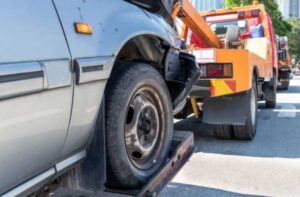
- Emergency Services: You’ll be paying for a tow truck to get your disabled vehicle to a shop, an immediate and unplanned expense.
- The Cost of an Accident: This is the true, catastrophic cost of neglect. Even a low-speed collision due to brake failure will trigger a financial avalanche. You will be faced with your auto insurance deductible ($500, $1,000, or more), a likely increase in your insurance premiums for years to come, and liability for the damages to the other vehicle. This doesn’t even begin to factor in the potential for devastating medical bills or lost wages.
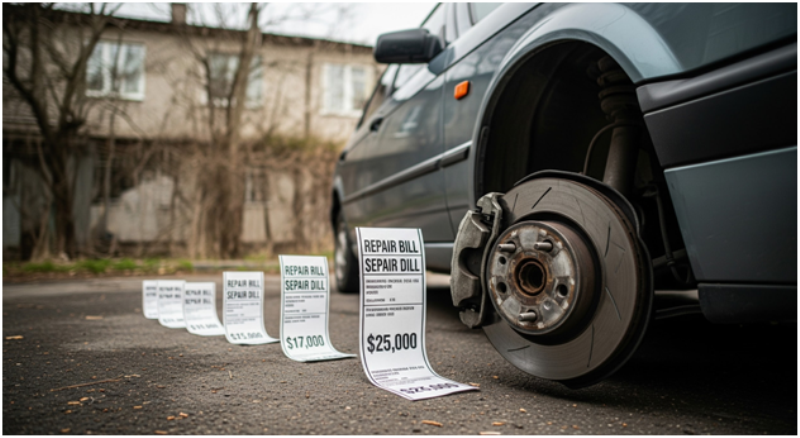
The true cost of neglecting your brakes is never just the price of the parts. It’s an exponential curve of consequences. That simple, routine brake job you deferred has spiraled into a multi-thousand-dollar disaster.
Brake maintenance isn’t an expense; it’s an investment in your financial security and personal safety. To understand what a routine, proactive repair should cost, you can find a helpful guide here on how much brake pads cost to replace. Don’t wait for the wake-up call.